Riccardo Fortina
An edition shaped by Africa
Africa and the 61st Venice Biennale have attracted considerable attention, not only because of the ethical and political controversy surrounding South Africa’s withdrawal over an artwork that touched on the highly sensitive issue of Gaza, but also because of the choices made by Koyo Kouoh, the Cameroonian-Swiss curator of the exhibition, who passed away in May 2025, shortly before its opening. At the Biennale, Africa is represented by 13 countries which, with the exception of Egypt and Morocco, are not located in the traditional venues—the Arsenale and the Giardini—but are scattered across other parts of Venice.
A new representation of African art
How is Africa portrayed at the Biennale? One of Koyo Kouoh’s legacies is undoubtedly her determination to affirm the existence of African art, to offer African artists a form of recognition within the international art and cultural community, and to acknowledge art and culture as drivers of a country’s economic development. Koyo Kouoh unquestionably sought to introduce a new way of representing African artistic sensibilities through a selection that, to some extent, moved away from Western tastes. At least in the case of the national pavilions, however, she had to find a compromise between creativity, which is African, and the market, which remains largely Western and closely connected to the United States and Europe.
Africa in the central exhibition
When attention shifts from the national pavilions to the central exhibition, the impression is quite different: among the 111 participating artists, there is a strong presence of African, Afro-descendant and African American artists. During my visit to the Biennale, I focused in particular on the works of Congolese artist Sammy Baloji.
Sammy Baloji between colonialism and cultural restitution
As stated in the exhibition panels, Sammy Baloji “uses the extraction of natural resources in Congo as a prism through which to investigate the enduring legacies of colonialism and the ways in which these structures have shaped the reception and contextualisation of African art. He reclaims traditional Congolese artefacts to enact a form of cultural restitution.”
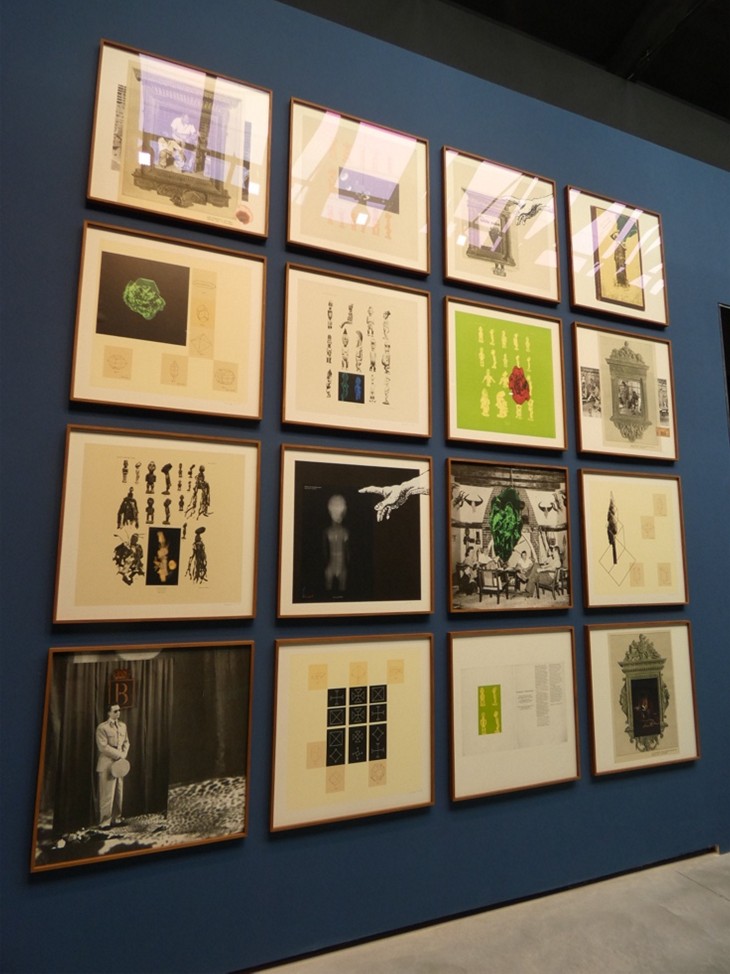
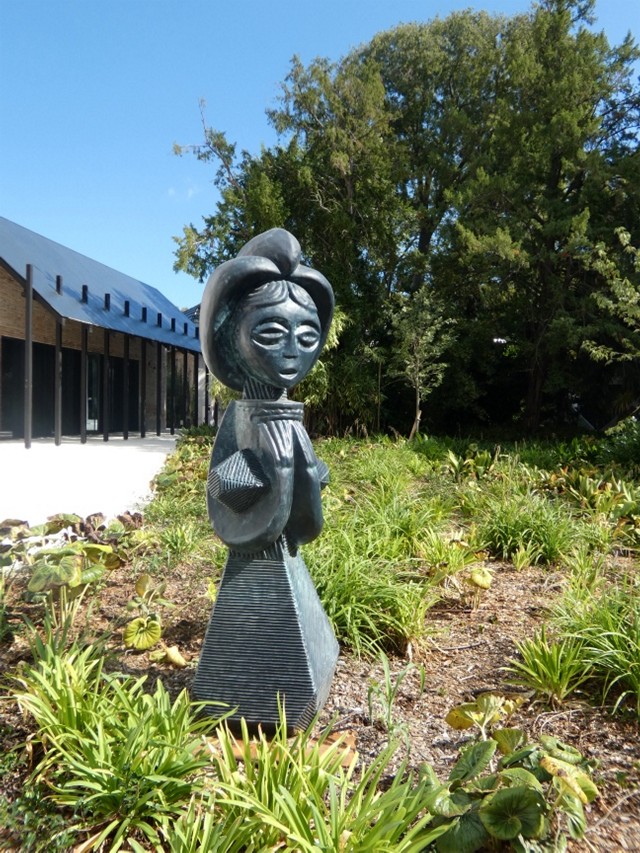
At the Biennale, he presented three sculptures and sixteen collages. Each sculpture is based on an artwork belonging to a different collection. A large outdoor sculpture draws on an object preserved in a Renaissance cabinet of curiosities, while the two sculptures displayed inside the Central Pavilion refer to works from a nineteenth-century Belgian colonial museum and from the collection of Mobutu’s national museum in the 1970s, which promoted a return to “authenticity”.
The collages, the memory of mineral resources and the minor keys
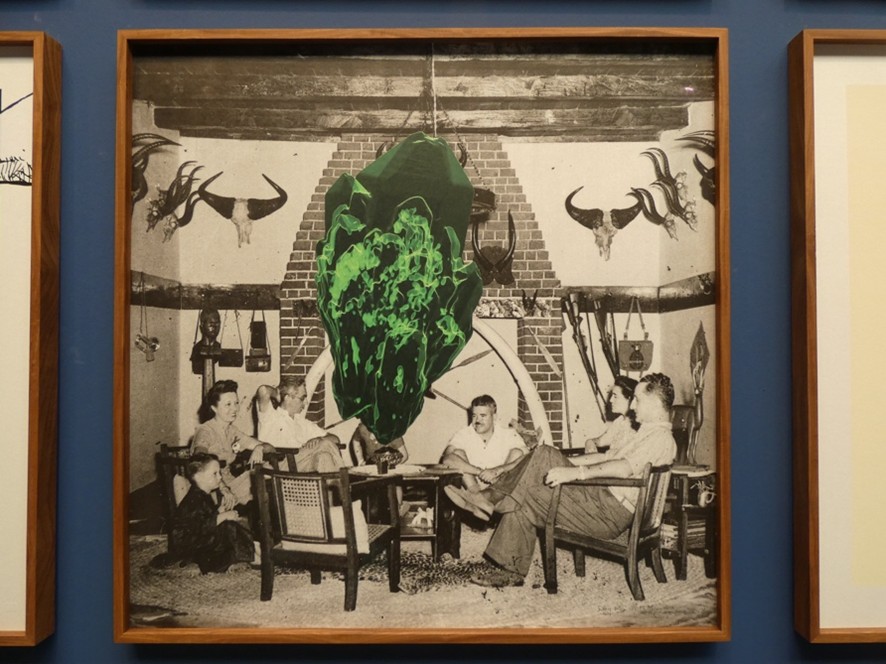
The collages were created by scanning and enlarging existing Congolese artworks and interweaving them with the artist’s own diagrams of mineral crystals. Inspired by the crystalline structure of uranium, these diagrams allude to radioactivity and the destructive consequences of atomic weapons.
These works are perfectly suited to a theme such as “In Minor Keys”—the title of the 61st Biennale—which proposes a radical reconnection with nature and with art’s original role in society: its emotional, visual, sensory, affective and subjective dimensions. The exhibition invites visitors to listen to the minor keys—the Minor Keys of its title—and to discover those oases and islands where the dignity of all living beings is protected.